










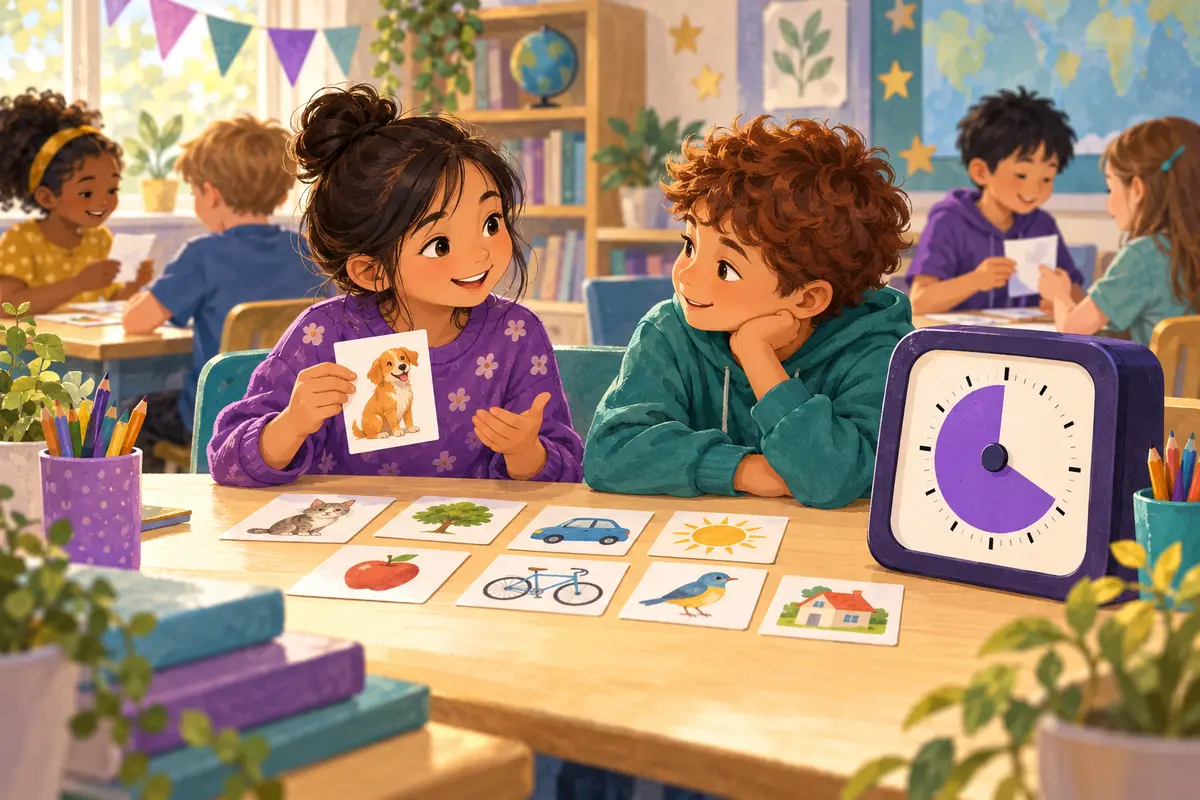
A classroom timer gives an activity a visible beginning and end. It can help learners share turns and understand how long to work, but speed should not become the main learning goal. Demonstrate the language first, allow preparation and adjust the time when learners need it.
These five activities suit familiar vocabulary and short sentence patterns. Treat the suggested timings as starting points. Use a silent visual timer, a gentle sound or a spoken signal according to the class, and offer extra processing time without making it a public penalty.
1. Picture Talk Partners
Give each pair a familiar picture, such as a park or classroom scene. Allow thirty seconds to look and prepare. Student A then describes it for about thirty seconds while Student B listens. Switch roles with a different picture or a new detail to describe.
Display prompts such as “I can see…” and “There is…” Beginners can name two objects, while more confident learners describe actions or locations. Finish by asking partners to report one detail they heard. The listening task gives both children a purpose throughout the turn.
2. Category Collectors
Choose a familiar category, such as animals or things in a school bag. Give pairs one minute to recall examples together. They can draw, write or quietly rehearse the words, depending on their literacy level. After the timer ends, ask each pair to share an example and check its meaning.
Set a shared target, such as collecting ten different words across the class. Avoid counting the same repeated word as a new example. For an extension, ask pairs to use one word in a sentence. Change the category only after students have had feedback.
3. Ask and Switch
Display one useful question, such as “What do you like to eat?” Model a short exchange, then give pairs about forty-five seconds to ask and answer. At the signal, switch the question card or change speaking roles. Students can remain seated; moving around the room is optional.
Ask learners to remember their partner’s answer and report it after the final round. Offer picture choices and sentence starters where needed. Use fewer rounds if the exchange is new so students have time to improve their answer rather than rushing to the next prompt.
4. Sentence Workshop
Show a picture and a sentence frame, such as “The ___ is ___.” Give pairs one minute to build a sentence, check that it matches the picture and prepare to say it. Invite several answers after the timer ends, then discuss one useful correction together.
Change the image and repeat, asking learners to apply the feedback. More confident pairs can add a location or join two ideas with “and.” Keep a word bank available for beginners. Recognize a clear, relevant sentence rather than the pair that finishes first.
5. Team Clue Challenge
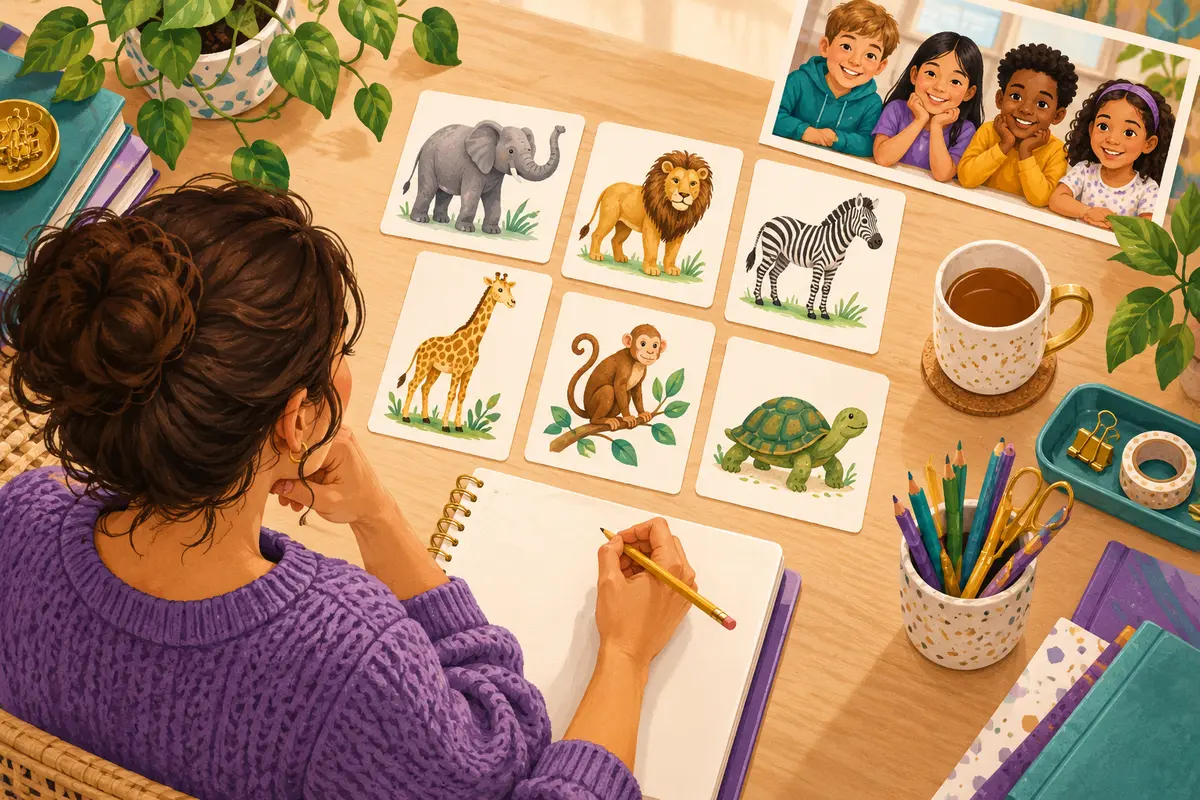
Give one learner a familiar picture card that teammates cannot see. Allow a short preparation period, then about forty-five seconds for clues and guesses. The clue giver might say “It’s an animal. It can swim.” Teammates ask questions or name the animal. Rotate the role each round.
If the timer ends before a correct guess, reveal the picture and review the clues. Keep every learner in the game. Offer a word bank or let two students give clues together. Award credit for useful English and thoughtful listening as well as a successful guess.
Choose timings that fit the task
Start with generous limits and observe the group. If most pairs cannot produce the intended response, simplify the language, add a model or extend the time. If everyone finishes early, add a meaningful follow-up question rather than shortening every round. Countdown pressure affects learners differently, so let preparation remain part of the activity.
Teach the stopping routine
Practice what happens at zero before beginning: finish the current word, put materials down and look toward the teacher. Explain whether a round can be paused and how students can ask for help. Leave enough time between rounds to check answers; continuous countdowns can crowd out the feedback students need.
A ten-minute review sequence
Use one minute to model Picture Talk Partners, then two minutes for preparation and exchanges. Spend two minutes sharing examples and correcting one recurring issue. Run a second two-minute exchange with a new picture, then use the final three minutes for individual responses and a brief recap. Adjust the balance to the group’s needs.
Make the timer support the learning
Use a visible classroom timer, such as Classivo’s free classroom timer, to mark a clear work period. Keep the spoken objective specific: “Ask your partner and remember the answer.” After the game, check that learners can use the language with the timer off. That independent response is more informative than how many rounds the class completed.