


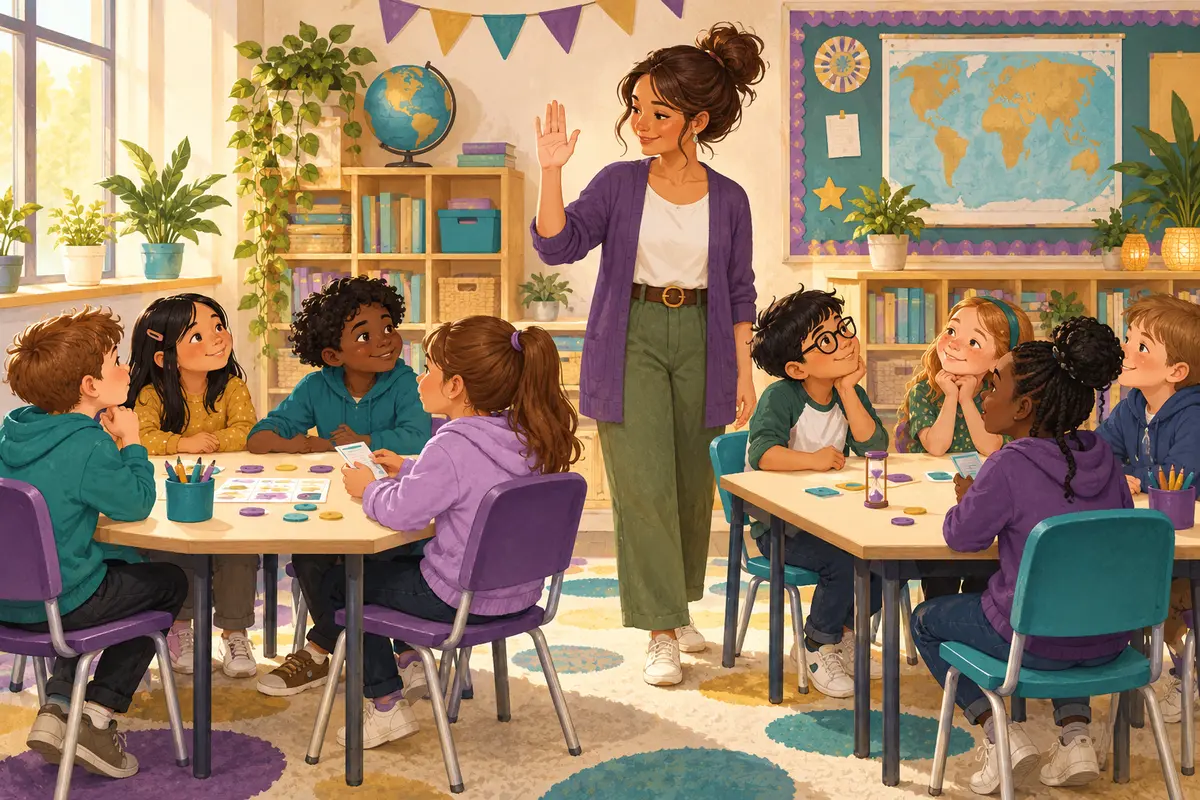
A classroom can sound excited while only a few children are answering. One student takes a turn at the screen, a confident teammate supplies the answer, and everyone else waits for the next animation. Before starting a game, plan what each learner will do during every round.
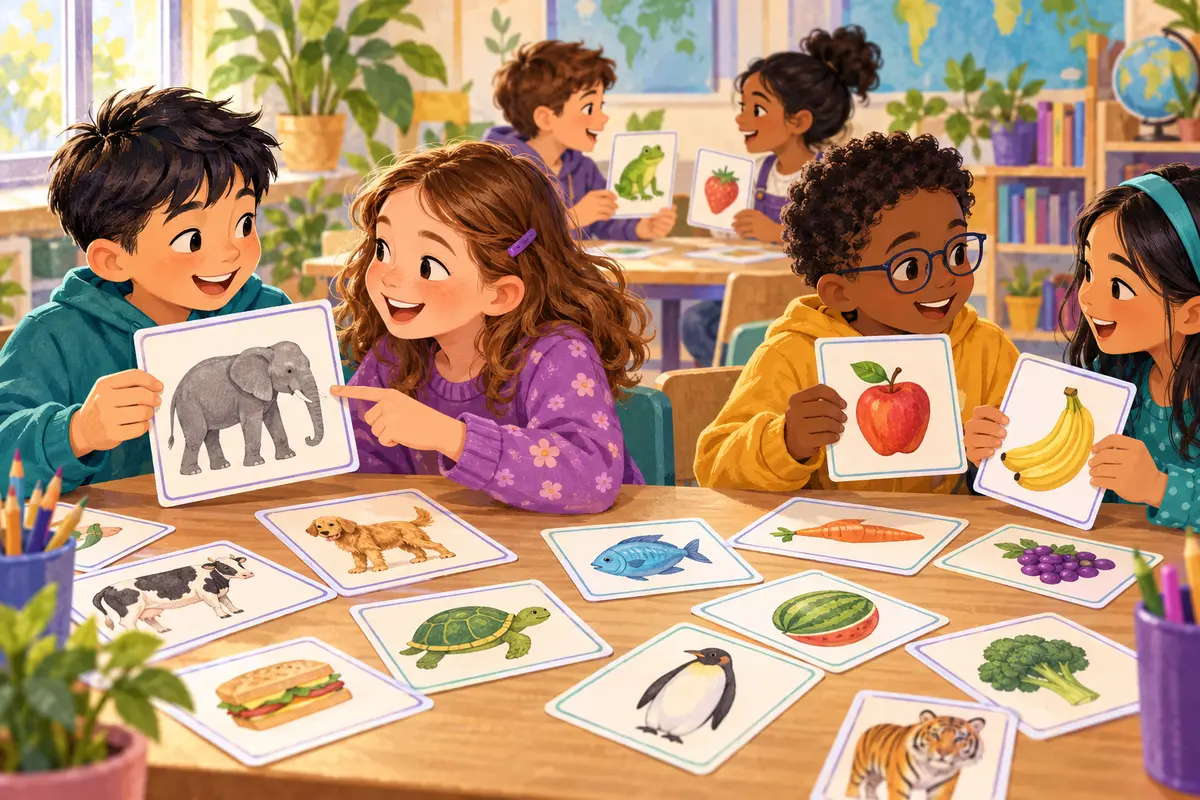
You can use one shared display, a laptop connected to a television, or a board with large picture cards. Students need paper or small whiteboards for some activities, but no individual devices. These games suit primary and lower secondary classes; adjust the language and examples to the age group and subject.
Set up a response routine
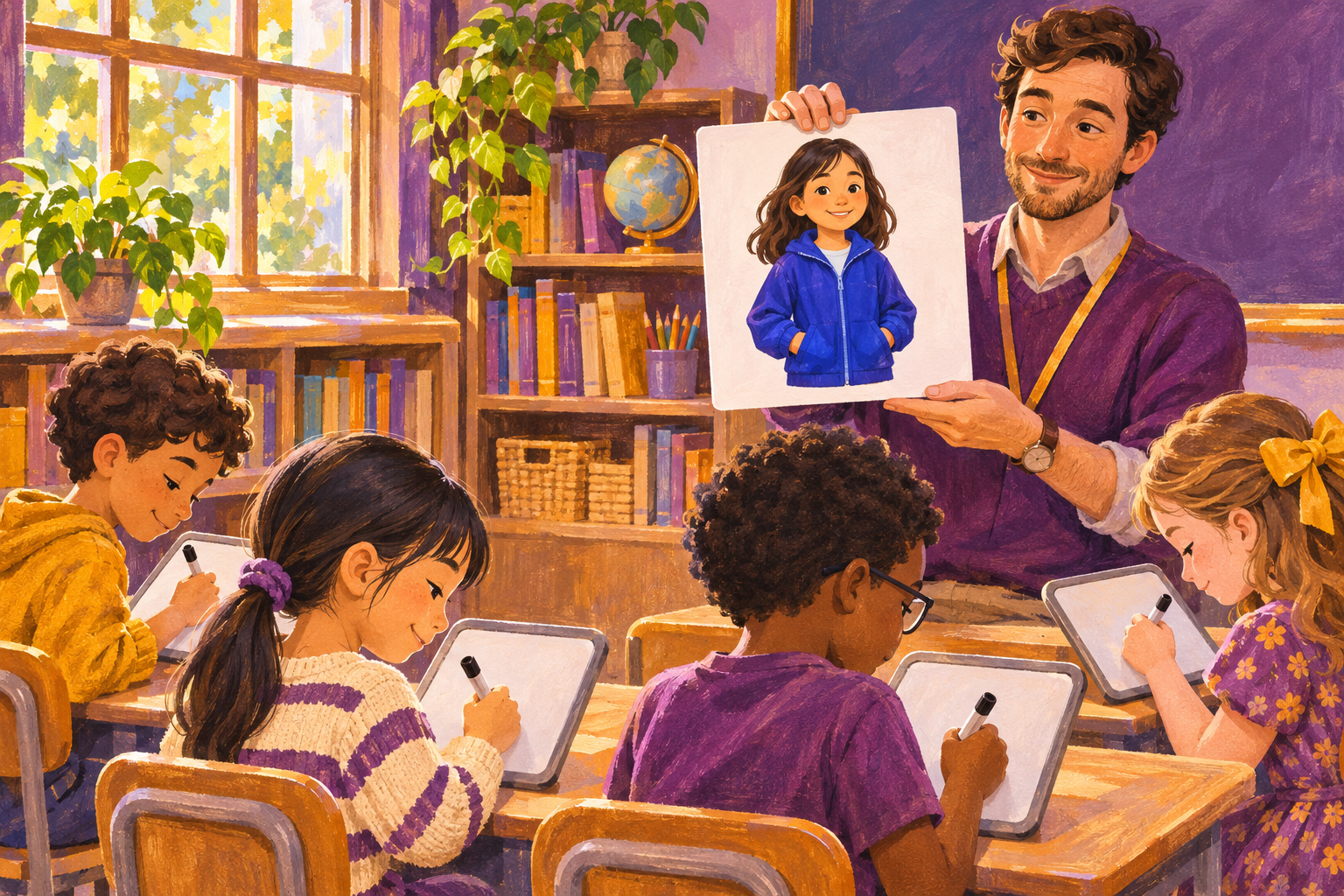
Choose one learning goal, such as describing an animal, explaining a calculation, or supporting an opinion. Model the response you expect. Then teach a simple sequence: think quietly, discuss with a partner, show or say an answer, and check it together. Leave enough time for each stage.
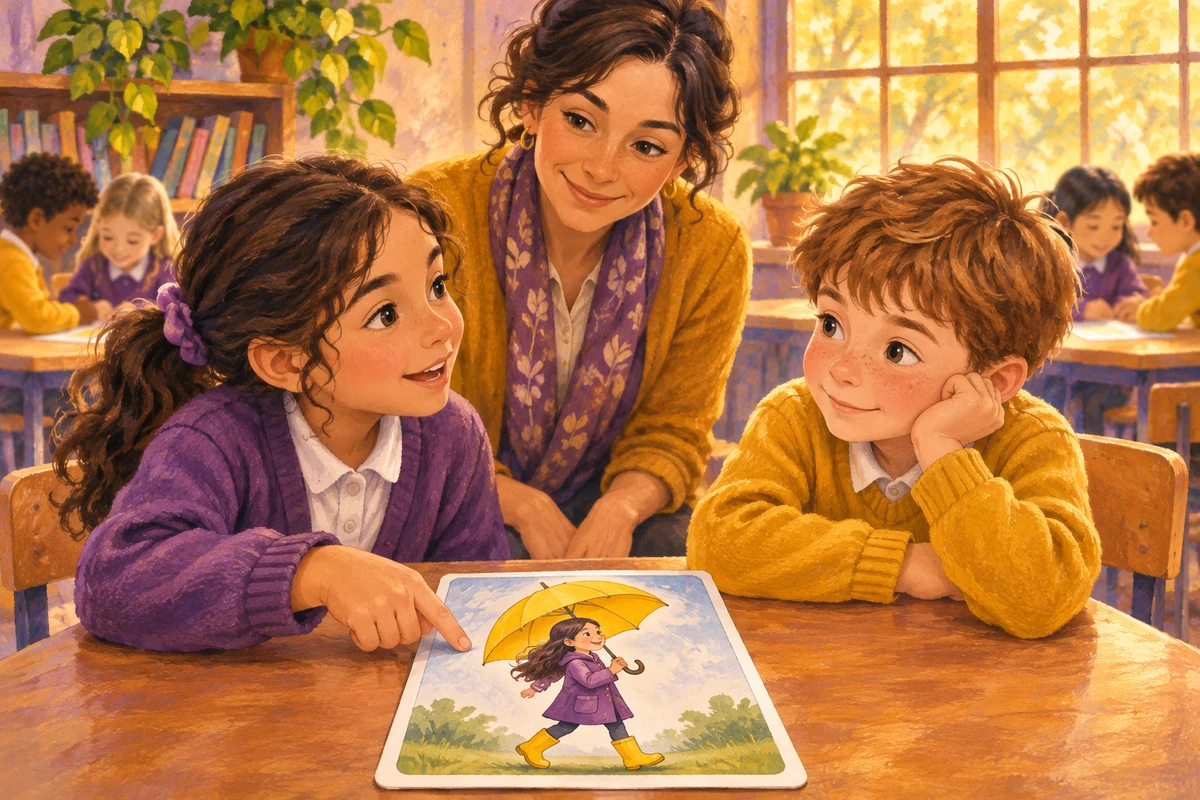
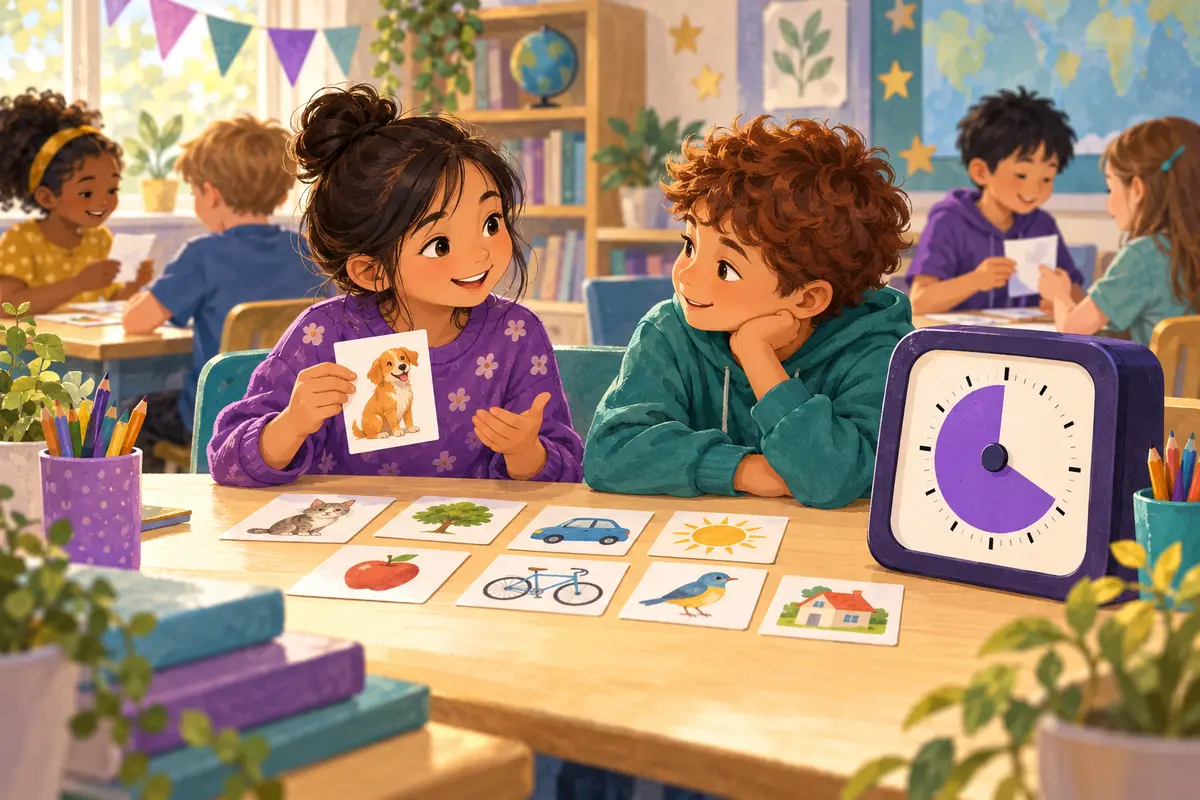
For a class of 30, begin with 15 pairs. Give partners the labels A and B and switch who explains first after each round. A learner can point, draw, or use a sentence starter before attempting a longer spoken answer. Check that everyone can see the display and has a clear way to respond.
1. Vote and Defend
Display a question with two or three possible answers. Everyone chooses independently and writes a letter or draws a symbol. At your signal, students reveal their choices together. Partners then explain their answers before you invite a few pairs to share. Discuss the reasoning and reveal the answer when the question has one.
For English, show a picture of children in a park and ask which sentence describes it. For science, ask which material would suit an umbrella and why. Provide “I chose ___ because ___.” Let students revise after discussion, then ask what helped them decide. Keep the initial vote low pressure so uncertainty is safe to show.
2. Repair the Robot
Tell students that a friendly robot has made a mistake. Display one short example: a sentence, a calculation, or a label beside a picture. Each pair finds the problem, prepares a correction, and explains the repair. Change who speaks for the pair each round.
Try “She are reading” beside a reading picture, or “7 + 5 = 11” in a maths lesson. Beginners can choose between two repairs. More confident learners explain the rule or create another correct example. If the class disagrees, compare the suggestions using the picture or a worked demonstration. Keep the robot's error separate from any student's work.
3. Discover the Secret Rule
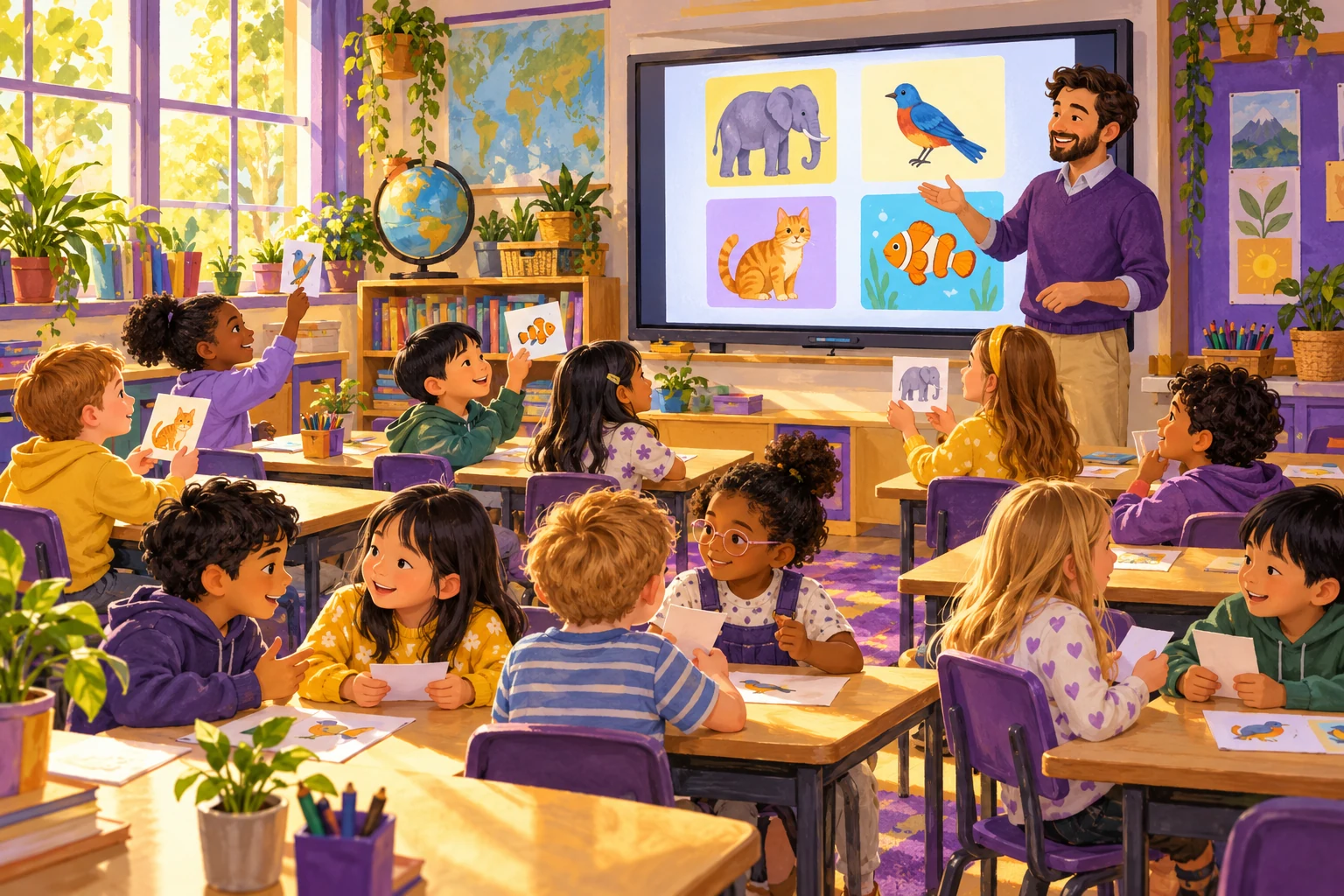
Create two groups on the display, each containing several clear examples. One might show a bird, a bat, and a butterfly; the other a dog, a cat, and an elephant. Pairs discuss the rule that separates the groups, then decide where to place a new picture. Ask them to explain their choice before you reveal your intended rule.
In this example, the rule could be “has wings.” For other lessons, sort words by sound, numbers by a shared property, or shapes by their sides. A different rule may also fit the examples; accept a well-supported explanation and add a new example to clarify. Have every pair record its prediction before the class discussion.
4. Spend a Clue
Choose a familiar animal, object, place, or historical figure. Give the class three shared clue tokens drawn on the board. Reveal one clue at a time. After each clue, pairs discuss a possible answer and decide whether to request another clue or attempt a guess. Take a simultaneous class vote to decide the next step.
An animal round might begin with “It is a mammal,” followed by “It lives in the sea,” then “It breathes air.” Several answers may fit early clues, so keep possibilities open. Before the reveal, every pair records a final guess and one supporting clue. The tokens add a decision to the game; there is no penalty for requesting useful information.
5. Build the Class Story
Show one interesting picture and agree on a sentence pattern. Every pair prepares an opening sentence. Invite one pair to begin the story, then have all pairs write or rehearse a possible next sentence. Select a contribution and add it to the shared story. Repeat for four or five sentences, inviting different pairs each time.
A scene at a busy station might begin, “A girl is waiting for a train.” The next sentence could introduce a missing bag or an unexpected visitor. Before selecting each contribution, both partners should rehearse it. Finish by asking each student to retell one event or suggest an ending. Keep a few useful words visible throughout.
6. Match the Mystery Answer
Display three possible questions and read out an answer. Pairs decide which question it matches, then practice the complete exchange. For “At seven o'clock,” choices might include “What time do you get up?”, “What do you eat?”, and “Where do you live?” Everyone shows a choice before you check together.
Once the routine is familiar, display only the answer and let pairs build their own question. “Because it needs sunlight” could lead to different questions in a science lesson. Accept any question that makes the exchange meaningful. Invite pairs to create a new mystery answer for the next round, checking it before it goes on the screen.
7. Class Against the Challenge
Draw five empty stars and set a shared goal: complete five different questions with explanations. Every student prepares an answer to each question. Partners compare their responses, then a different pair explains to the class. Add a star after a successful explanation, including one improved after feedback.
Use questions from the current lesson and vary the response: name, describe, compare, predict, or explain. If an answer needs work, give everyone a chance to revise before returning to the speaker. Keep the original question visible. At the end, ask students to identify one explanation that helped them understand something. Use the stars to mark progress without naming anyone responsible for a missed goal.
Give every round a learning job
If you use a digital game with team turns or power-ups, keep a question visible long enough for everyone to respond. Waiting students can prepare an explanation, check a sentence, or write a prediction before the current team plays. Pause between turns to discuss the answer and rotate speakers.
For more help organizing competition, read How to Run Team Games Without Chaos. Begin with one response method and introduce extra game rules once the class can follow it comfortably.
Check what remains after the game
Close with one fresh prompt that uses the same skill. Ask students to answer independently through a short sentence, a drawing with a label, or a worked example. Review those responses before deciding what to teach next. A class score cannot show which learners still need support.
You can use Classivo's lesson images as shared prompts and choose a game that fits your learning goal. Keep paper responses or a board version ready if the screen is unavailable. Start with one activity next lesson, note who had a chance to respond, and adjust the next round based on what you observe.