







You show a picture of a girl carrying an umbrella and ask, “What is she carrying?” A student points to the right picture but stays silent when you invite them to answer. They may recognize the word when they hear it and still need help finding it, starting a sentence, or saying it in front of classmates.
Try the same question again with one change. Keeping the question familiar lets you see what makes the next attempt easier.
Minute 1 · Check what students understand
Show two pictures, one of a girl carrying an umbrella and one of a girl carrying a bag. Say, “Point to the girl carrying an umbrella.” Let everyone point or show a card for their choice. In a large class, students can hold up one or two fingers at the same time.
If several students are unsure, point to the object and model the word before continuing. If they recognize it, keep the pictures visible and ask, “What is she carrying?”
Minutes 2–3 · Change one thing about the question
Choose one adjustment based on what you notice. Try it for a round before adding another.
| What you notice | What to try |
|---|---|
| The learner points correctly and pauses when asked to name the object. | Offer the word umbrella as a cue. If they can already say the word, try the sentence starter “She’s carrying ___.” |
| The learner starts to answer just as another student speaks. | Ask everyone to think quietly for five seconds before anyone answers. Adjust the pause to suit the class. |
| The learner answers quietly to a classmate and hesitates in front of the group. | Keep the same question and invite them to answer a partner first. Give each partner a turn to ask and answer. |
These are clues about this particular task. A response can change with the question, the partner, or the day.
Minute 4 · Offer a manageable speaking turn
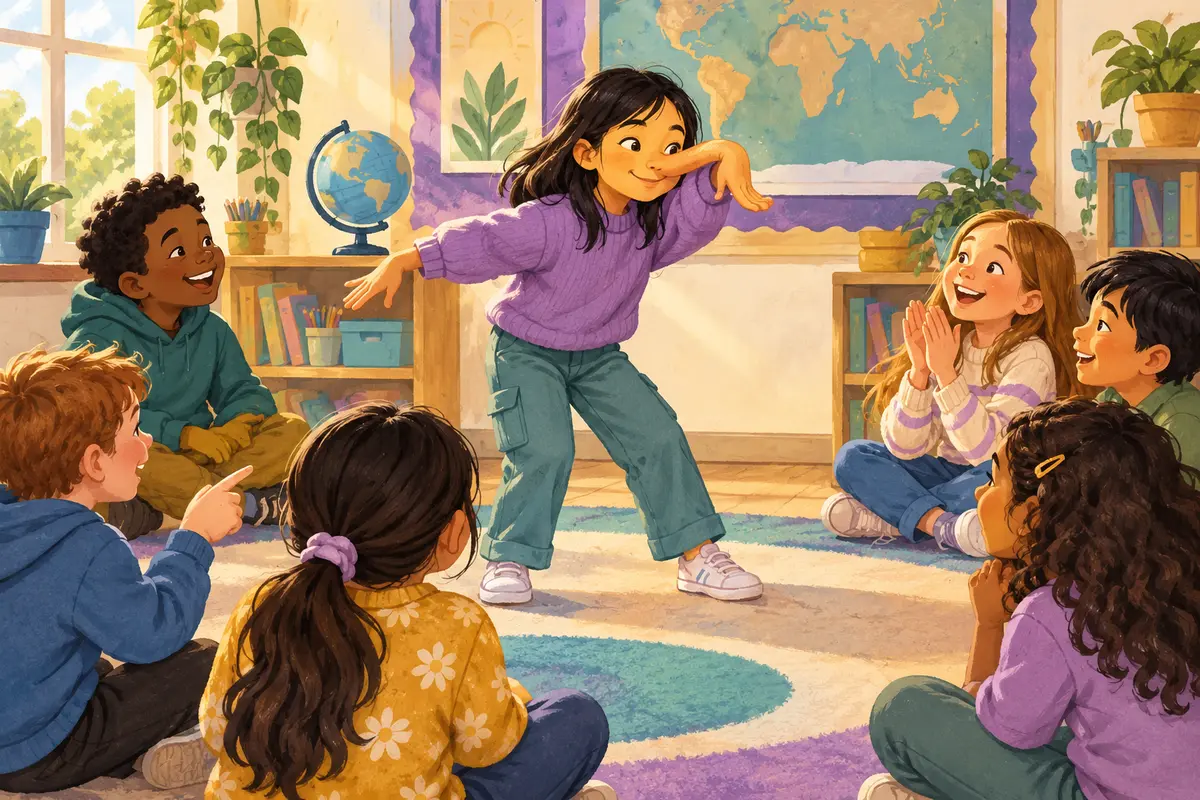
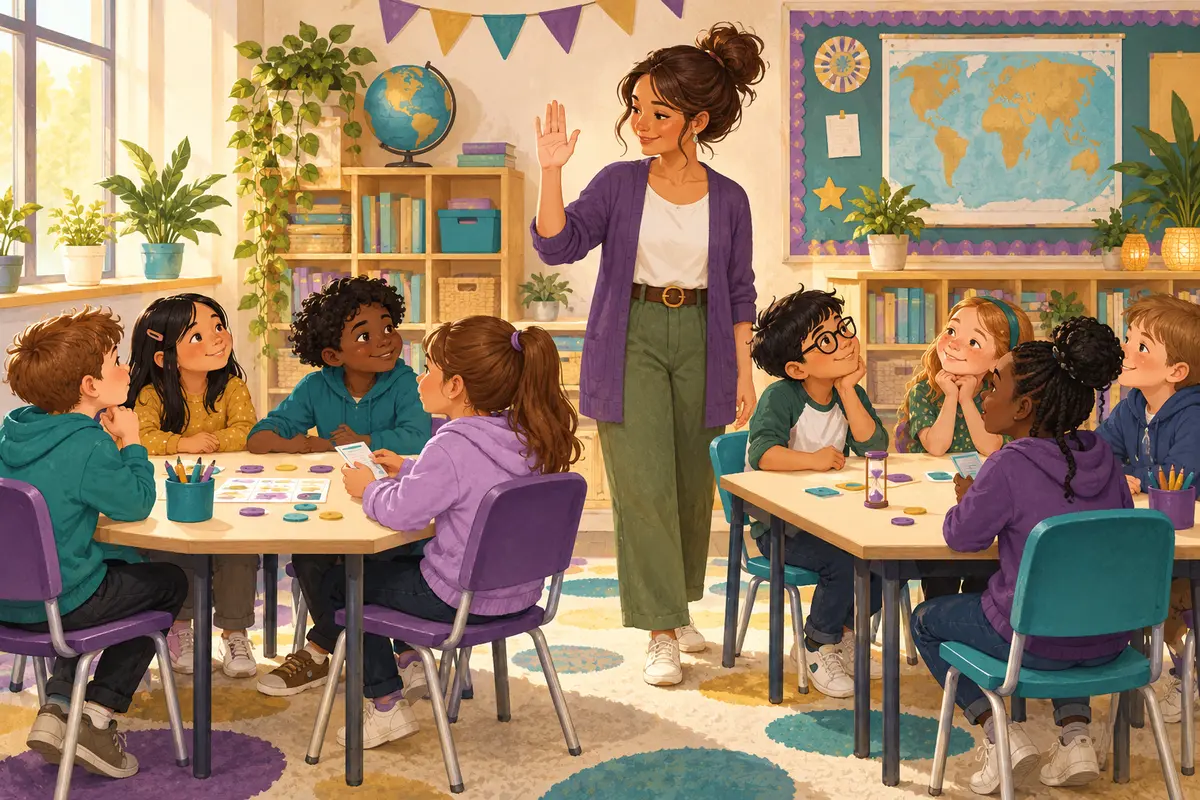
Tell students what they can choose: “Say it to your partner, tell me when I come by, or volunteer to share with the class.” Partners can both speak while you listen to a few pairs. Accept a word or phrase when that is the learner’s next step. If a student passes, let them listen and offer another chance later.
For primary, start with “Umbrella,” then model “She’s carrying an umbrella” and offer a chance to try it. For lower secondary, once the description is comfortable, ask “Why might she need it?” and offer “She might need it because ___.” That follow-up adds a new demand, so give students time to prepare it.
Minute 5 · Note one thing to try again
Pick two or three learners to check in with during each lesson. Write one quick observation, such as “Answered with a word after extra thinking time” or “Used a full sentence with a partner.” Next lesson, use a new picture with the same sentence pattern. Keep the support that helped, then see whether the learner is ready for a small change.
You can run this routine with pictures on paper, on the board, or on a shared screen. If you’re using a Classivo game, try it with one picture before the round begins so students can get a speaking turn at their own pace.
Further reading
- In a 2023 study of 281 primary pupils in Egypt, children reported feeling least anxious during well-managed pair work. British Council study
- A 2026 interview study in Chinese vocational English classes identified pressure to answer immediately and fear of peer judgment among reasons older learners hesitated. Frontiers in Psychology study