


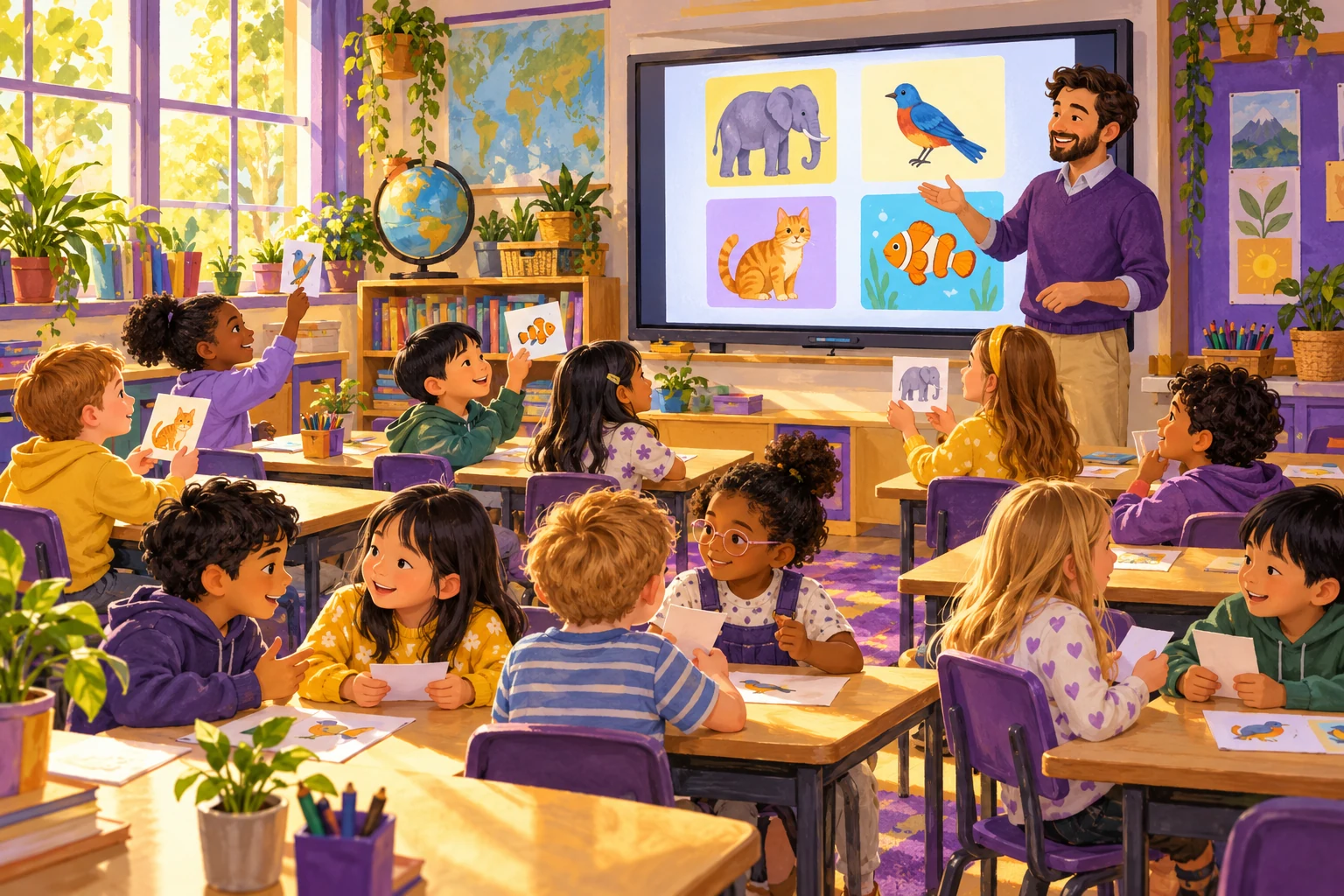
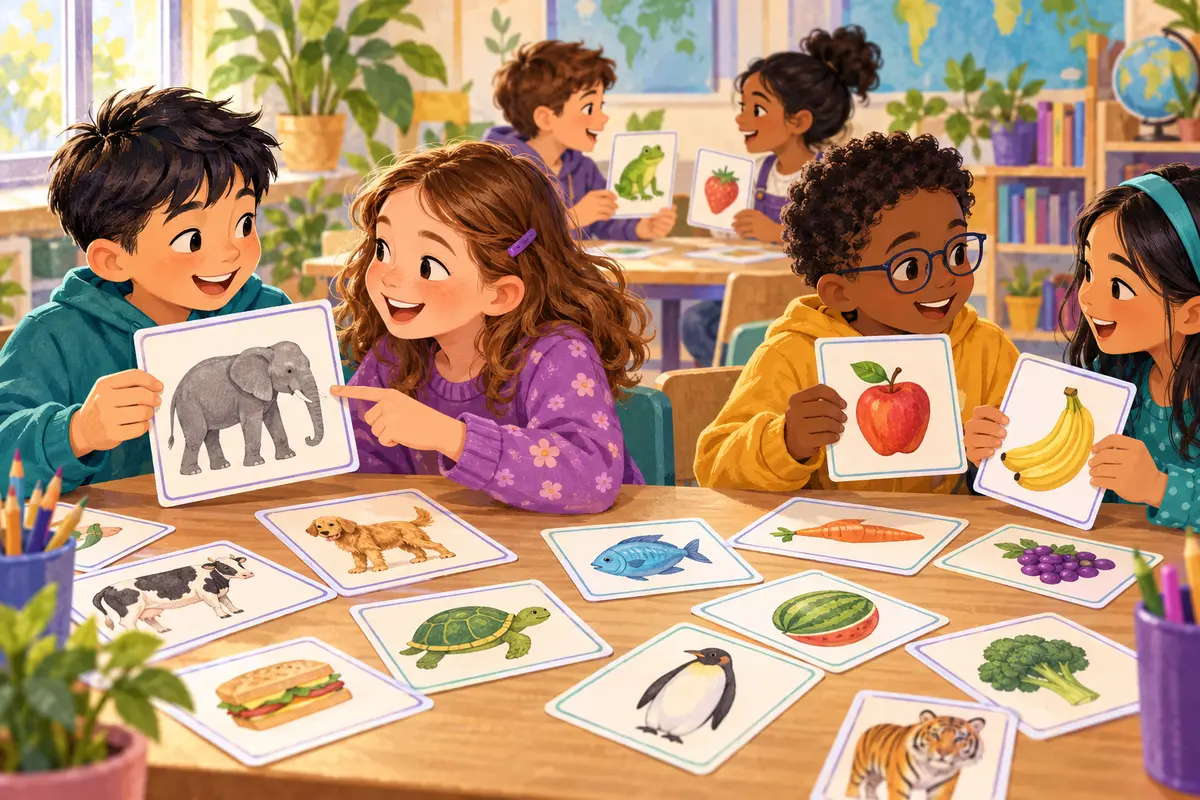
There’s one minute left in class. The winning team has just shouted “Blue jacket!” and half the room is cheering. It feels like everyone knows it. Then you hold up a different picture the next day and ask the same question. This time, you hear from the same two or three students.
If that sounds familiar, try saving two pictures for after the game. You’ll use one before students leave and the other at the start of the next class. Even with 30 students, the two checks and a quick look at the answers take about three minutes of lesson time.
Before you play, save two pictures
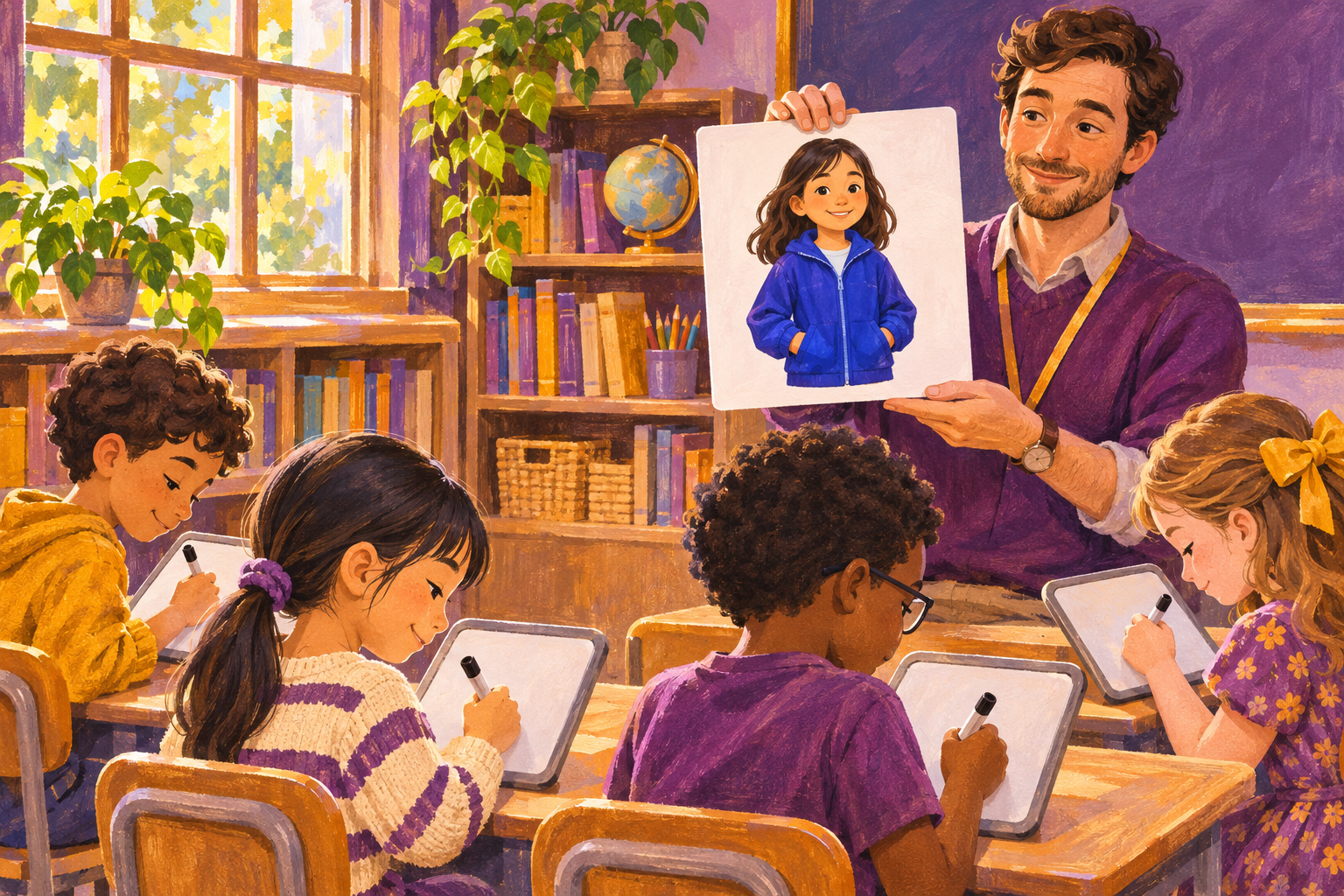
Say you’re teaching clothes and you want students to use “She’s wearing…”. Keep one picture of a girl in a blue jacket and another of a girl in a red jacket. Use words they’ve already practiced, and leave both pictures out of the game.
Decide what you’re listening or looking for. If the lesson was about building a sentence with She’s wearing, you can let a small spelling slip go and pay attention to how students put the sentence together.
Before they leave, ask one question
Show the blue jacket picture and ask, “What is she wearing?” Give everyone a moment to write their own answer. If you use mini whiteboards, have students turn them around together. If you use paper, collect the slips on the way out.
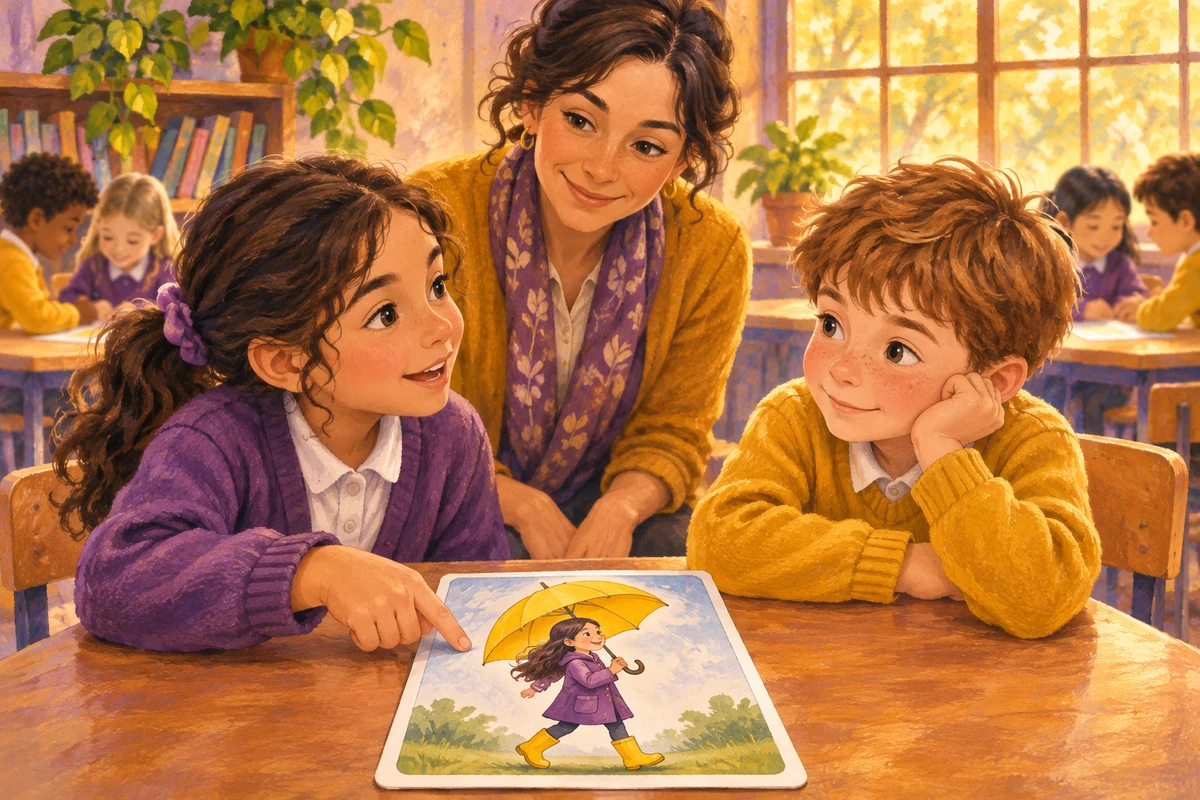
With children who are still learning to write, have partners take turns answering quietly. Ask them to save any hints until both have had a go. You’ll only hear a few pairs in a minute, so listen to different pupils the next time you try it.
Next class, ask it again
Before you go over the vocabulary, show the red jacket picture and ask, “What is she wearing?” Give students about the same amount of time and let them answer the same way. If you put She’s wearing… on the board the first time, leave it up again. You can try a separate check without the starter later.
Let their answers pick your warm-up
Look for an error that several students made. If you use paper slips, glance through the first set before class so you have time to look at the new answers during the warm-up.
- “She wearing a red jacket.” They’ve found the clothing word. If is keeps disappearing, say She is wearing… and She’s wearing… aloud, then give them one more picture to describe.
- “She’s wearing a red shirt.” The sentence is there. If you see shirt on several boards, show a shirt and a jacket side by side and ask students to name each one.
- “She’s wearing a red jacket.” If most students can do this with the new picture, move on. You can give the pupils who need it another short turn while the rest of the class starts the next task.
If most answers surprise you, take a second look at the picture. Could students see it clearly from the back? Was the jacket easy to tell apart from a shirt? A clearer prompt might be all you need before you check again.
Next time you run a classroom game for English lessons, keep two pictures handy. When the cheering dies down, you’ll have a quick way to see what each student can do and where to start next class.
Further reading · Edutopia shows how to use a one-question quiz and other quick checks for understanding. 7 Low-Stakes Formative Assessment Activities