






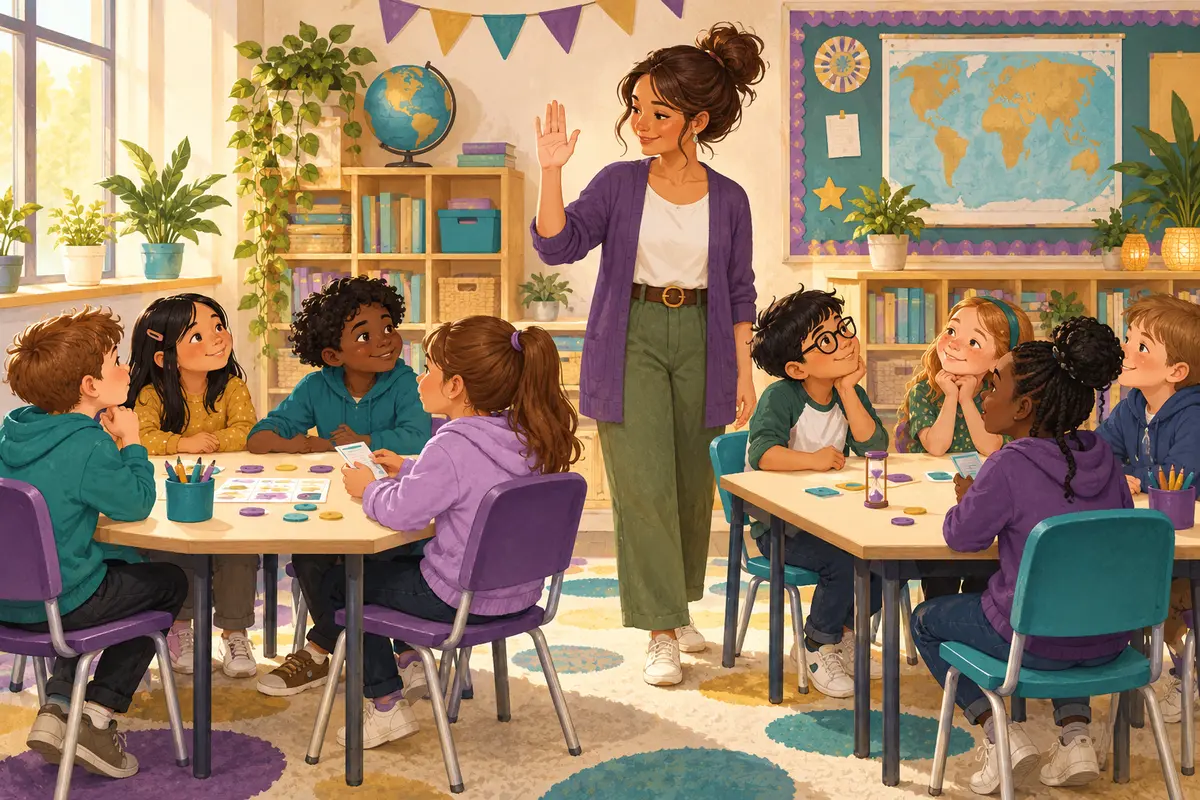
A student who rarely volunteers may need preparation time, a clearer question or reassurance that a mistake will not become a public event. Before adding another reward, look at what makes participation difficult. Motivation is easier to support when the next step feels manageable.
These seven routines offer practical starting points for primary and lower secondary English lessons. Choose two to introduce consistently, then watch who participates and who still needs support.
1. Greet students and notice how they arrive
Use students’ names and give them a brief, friendly welcome. Offer a simple question they can answer successfully, such as “How are you today?” A learner who seems tired or unsettled may benefit from a quiet start rather than immediate public questioning. Keep the greeting warm without requiring every child to perform enthusiasm.
2. Make the learning goal concrete
Replace “Learn about food” with “Ask a partner what they like and answer with a full sentence.” Model the exchange before practice. At the end, repeat a similar task so students can identify what they can now do. An observable goal gives both the teacher and the learner something useful to check.
3. Describe the action that helped
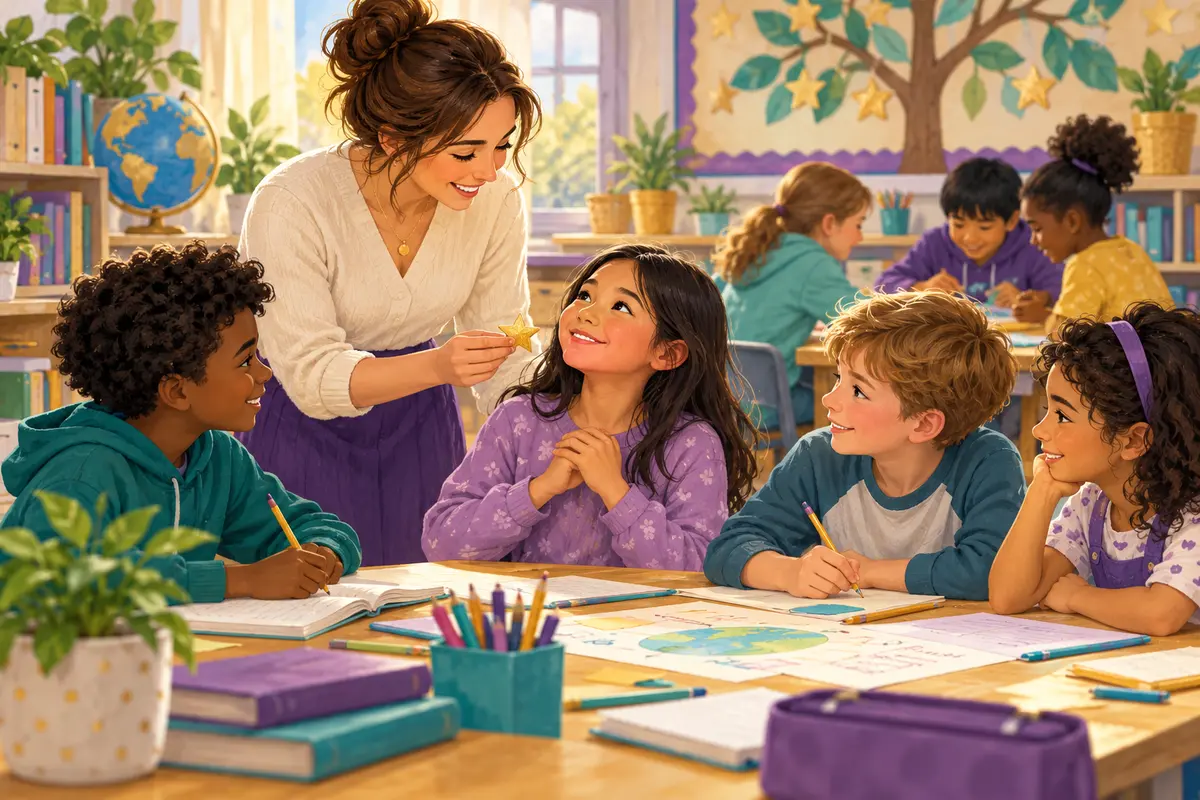
Specific feedback tells students what to repeat: “You checked the picture and corrected your answer” is more useful than “Amazing!” Recognize a successful strategy, improvement or careful contribution. If a learner keeps struggling, offer a different approach or a smaller step; praising effort alone does not remove the difficulty.
4. Offer a small meaningful choice
Let students choose between two speaking prompts, select a picture to describe or decide which practice task to complete first. Keep the learning goal the same for everyone. For example, both a sports picture and a food picture can support “I like…” sentences. Too many choices can slow a lesson, so start with two.
5. Make individual progress visible
Help learners compare today’s work with their own earlier attempt. A child might move from naming one animal to saying “A bird can fly.” Record that improvement in a learning notebook or recognize it briefly during feedback. If you use points, offer several ways to earn them so confidence and speed do not determine every reward.
6. Use examples students can talk about
Build questions around familiar routines, local weather, hobbies and school life. Let students contribute examples rather than assuming everyone shares the same interests or home experiences. A prompt such as “Choose a place you know and describe it” gives more entry points than a question that depends on travel or expensive activities.
7. Finish with evidence of success
Reserve the final two minutes for an achievable exit task. Ask students to tell a partner one new sentence, identify a picture or correct a familiar example. End with accurate feedback about the learning: “Today you asked the question without reading it.” Use any remaining difficulty to plan the next lesson’s opening review.
A routine to try next lesson
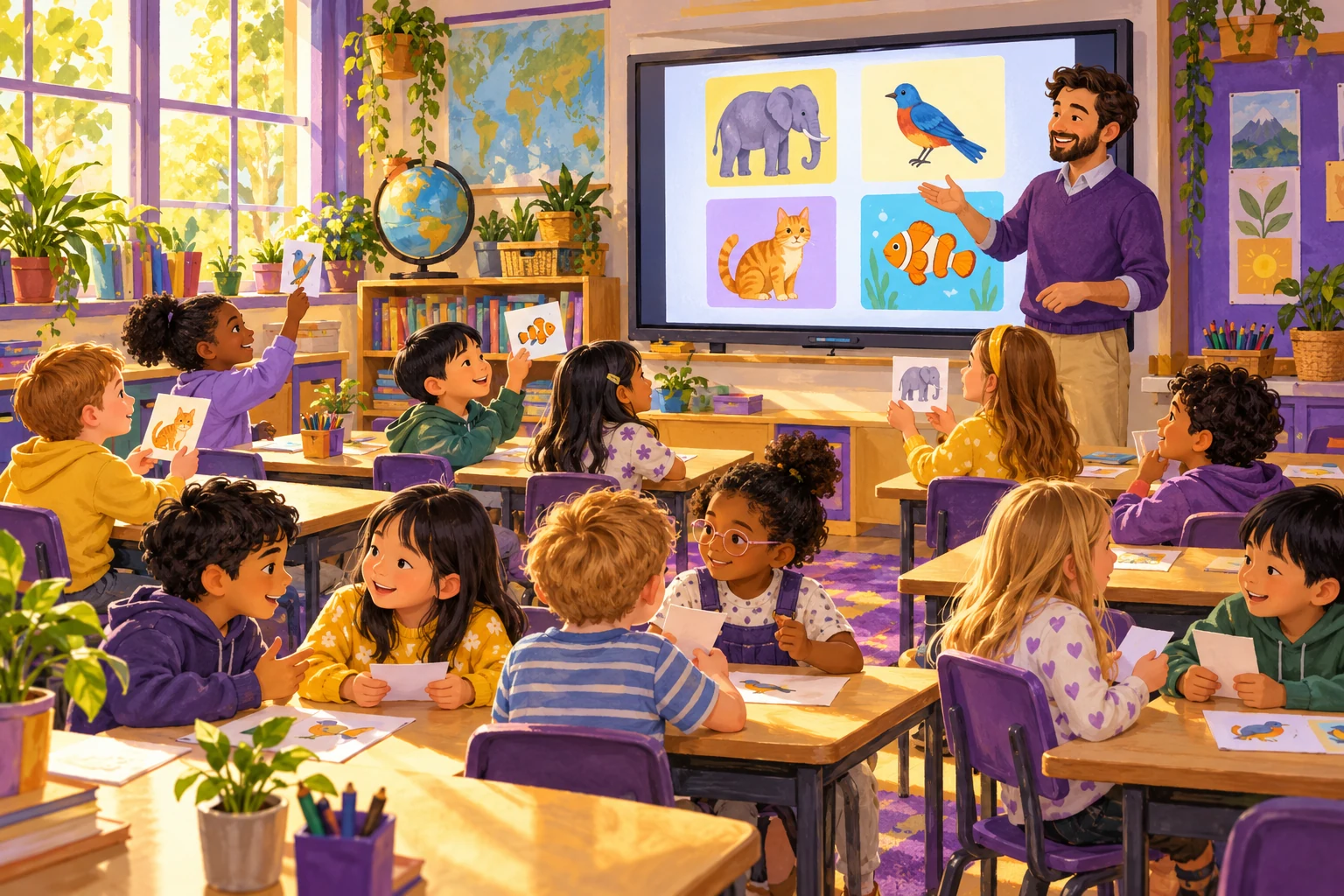
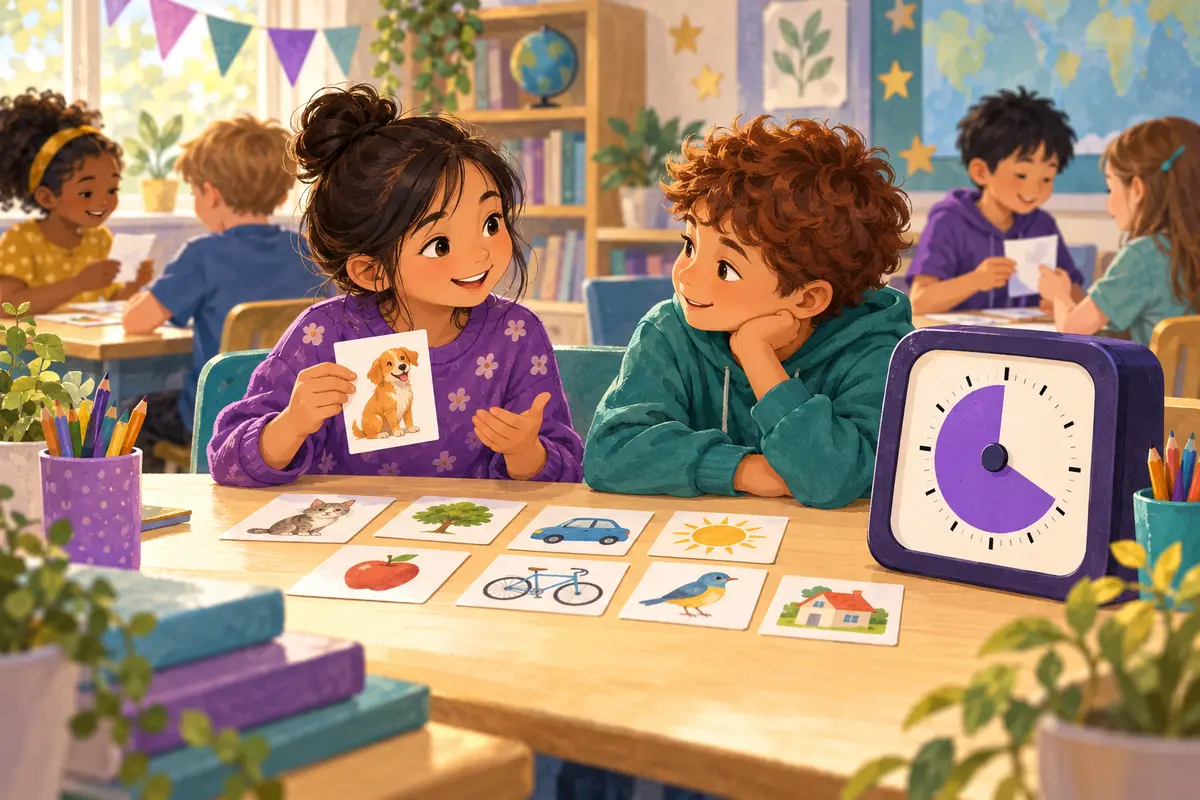
For a lesson on abilities, display “I can ask and answer about actions.” Model “Can you swim?” and let pairs choose two action cards. Give everyone quiet thinking time before they speak. During practice, notice one helpful behavior, such as listening and asking a follow-up question. Close with a fresh card and check whether students can transfer the language.
When a learner still avoids participating
Speak privately and ask what would make the task easier. Offer rehearsal with a partner, a sentence starter or a pointing response before spoken production. Avoid treating hesitation as laziness. After several lessons, review whether the support is helping and adjust the demand rather than increasing public pressure.
Put one change into practice
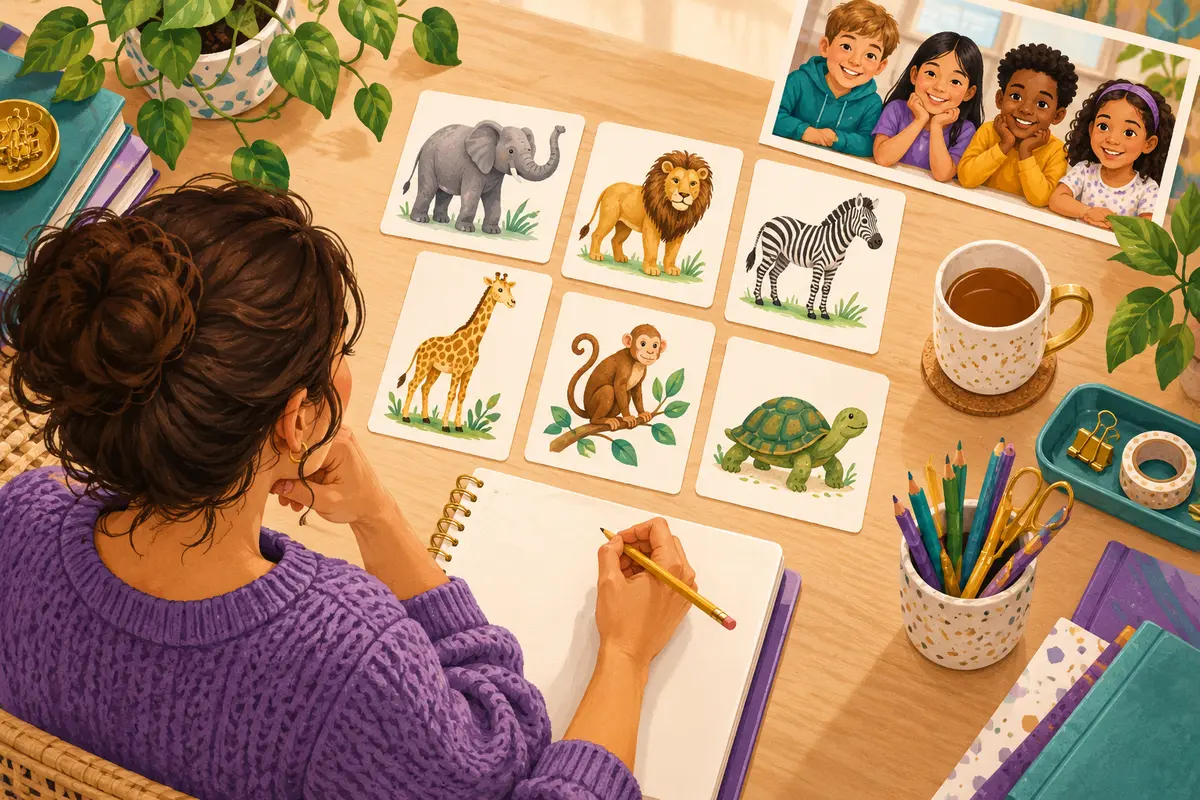
Keep a simple participation note for a week. Record who attempted the target language and what support they needed. Use that information to choose your next adjustment. If you use Classivo to record classroom points, connect each award to a clear action and keep feedback about the language at the center of the lesson.