




Vocabulary practice becomes more useful when students do something different with the same words. A learner might recognize “umbrella” in a picture but struggle to recall it or use it in a sentence. Plan activities that move through these demands instead of repeating a word list in the same way.
The routine below uses weather vocabulary, but you can adapt it to food, animals, clothes or classroom objects. Start with a small set that fits your learners’ level and the time available; six words is a workable example, not a fixed rule.
Choose words that belong in a useful exchange
Decide what students will say with the vocabulary. For weather, a practical goal is “Ask about the weather and choose suitable clothing.” Select words such as sunny, rainy, windy and cold, then add only what the group can reasonably practice. Include familiar words to create an accessible starting point.
Establish meaning before asking for recall
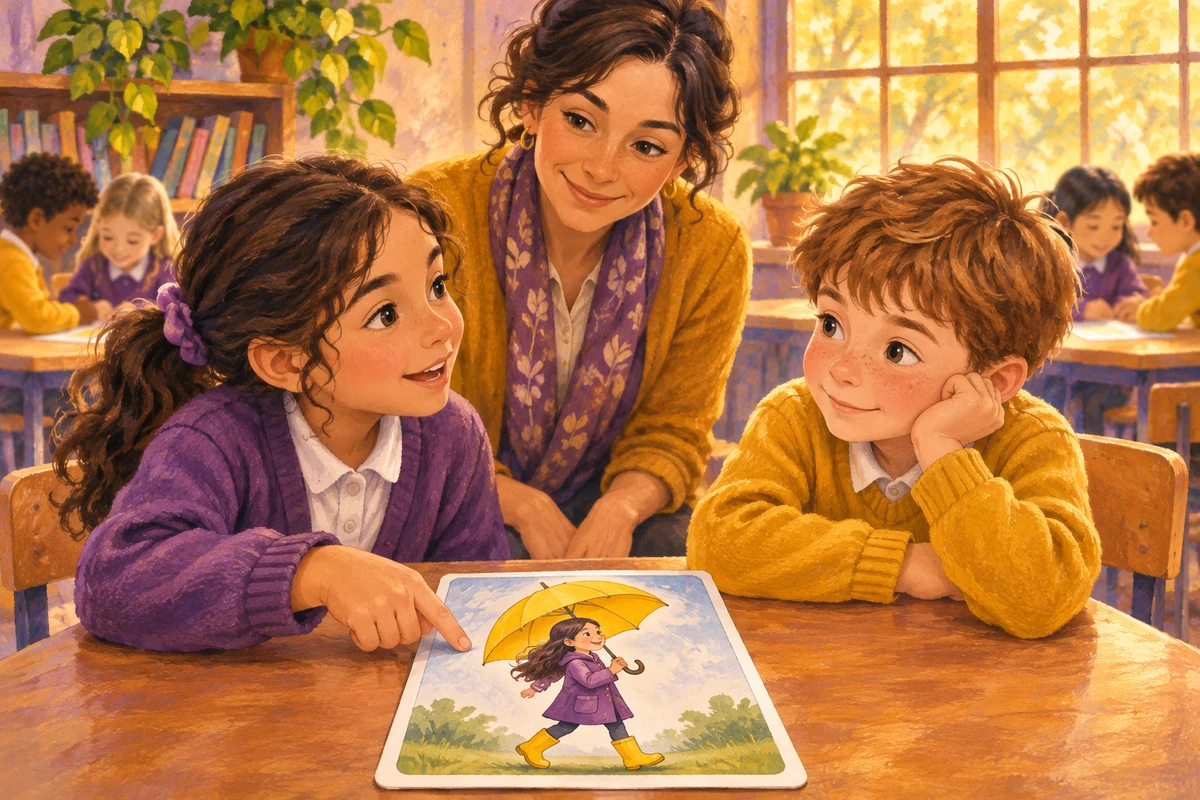
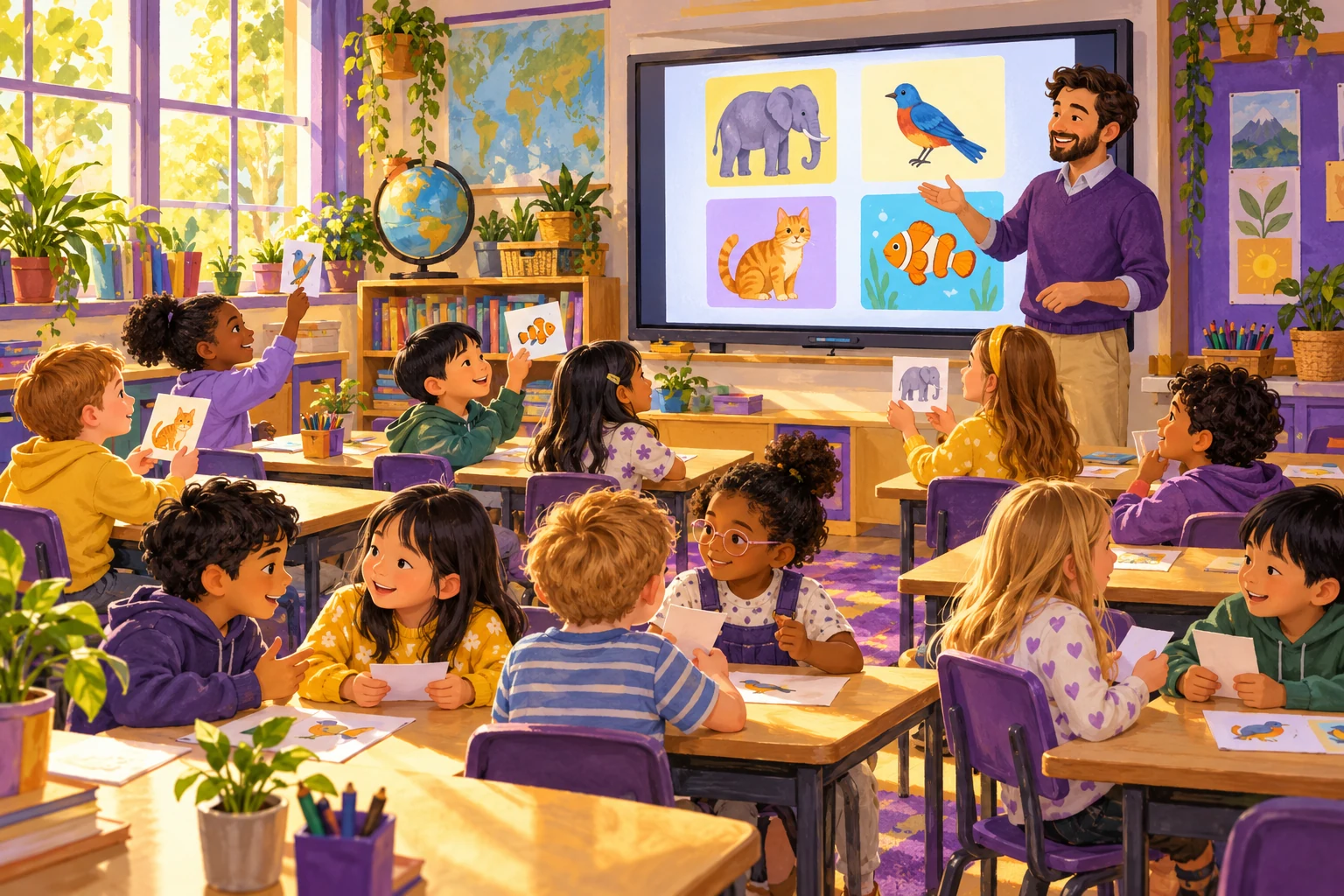
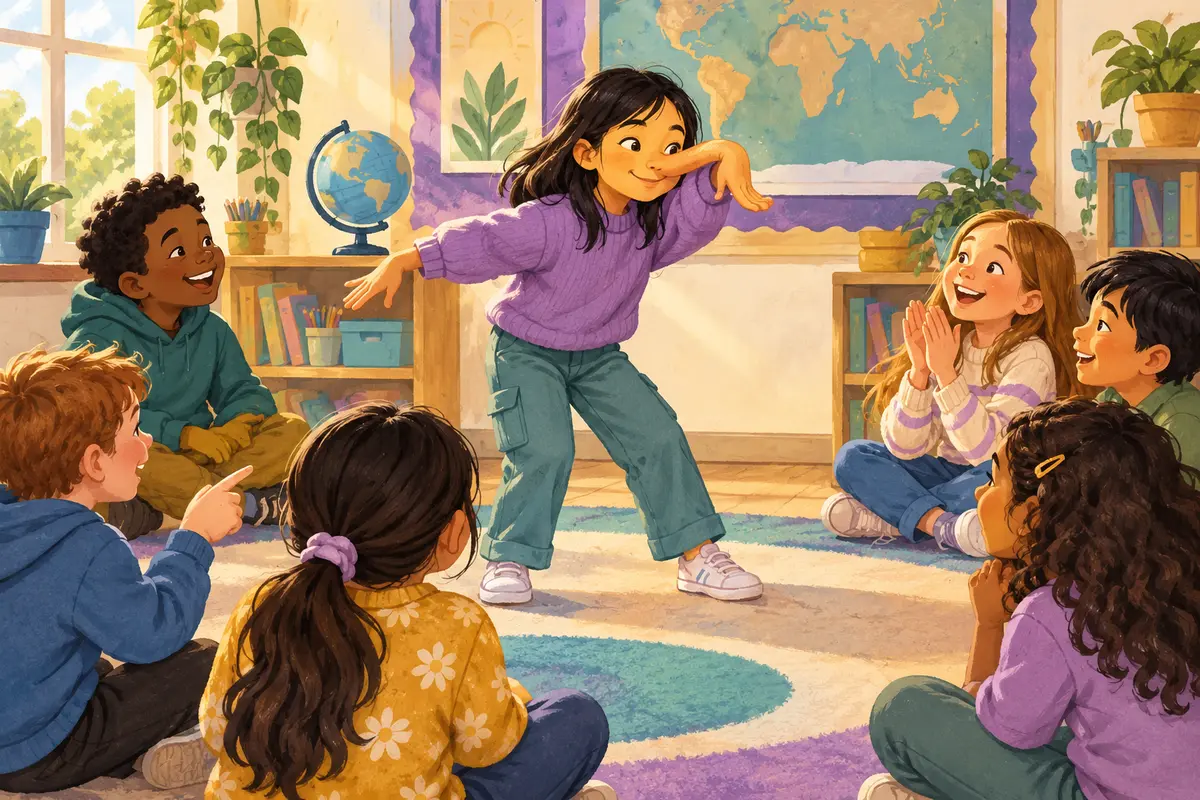
Show a clear image or gesture, say the word naturally and check meaning through a choice: “Is it rainy or sunny?” Invite repetition after students understand the picture. Keep pronunciation practice brief and audible without shouting. Check individual understanding later because a confident class chorus can hide uncertainty.
Change the task while keeping the vocabulary
Begin with recognition: students point to the picture you describe. Move to recall: cover a card and ask what has disappeared. Then introduce a reason to speak: one student describes the weather while a partner chooses a clothing card. Each stage asks learners to use the words with a little less support.
Give pairs a task with a clear outcome
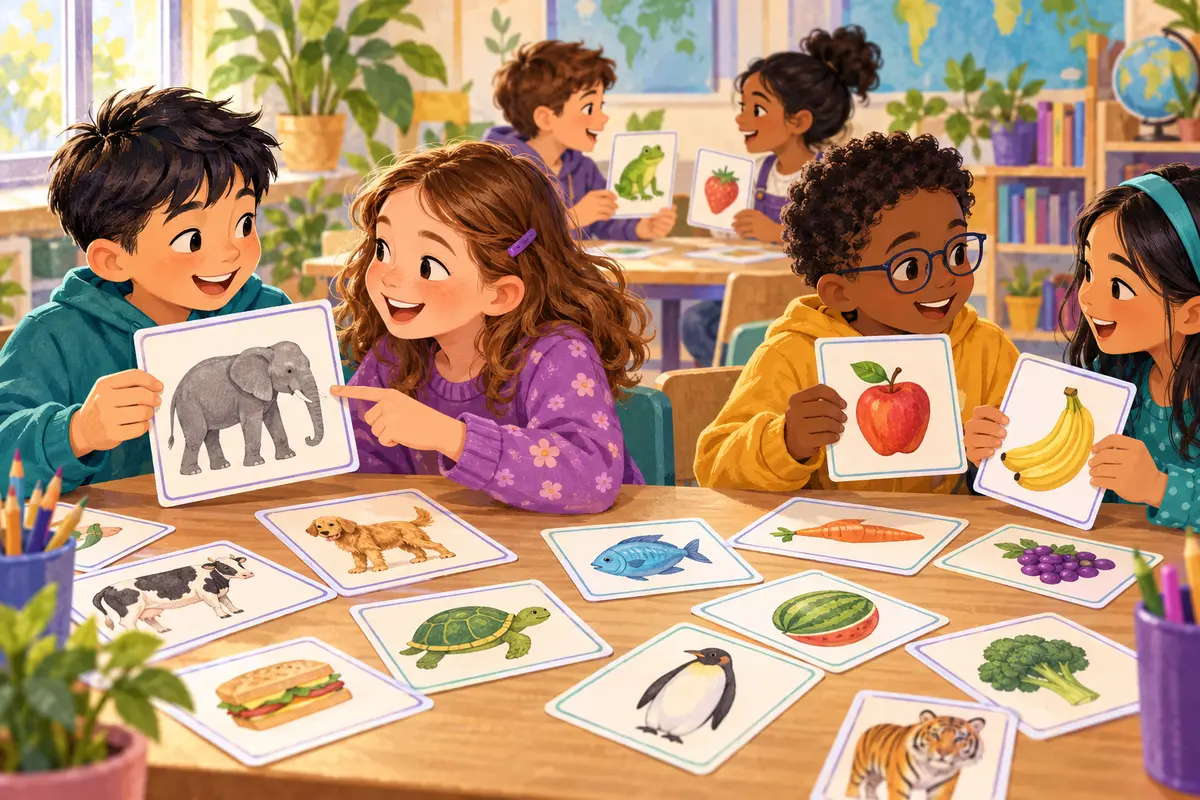
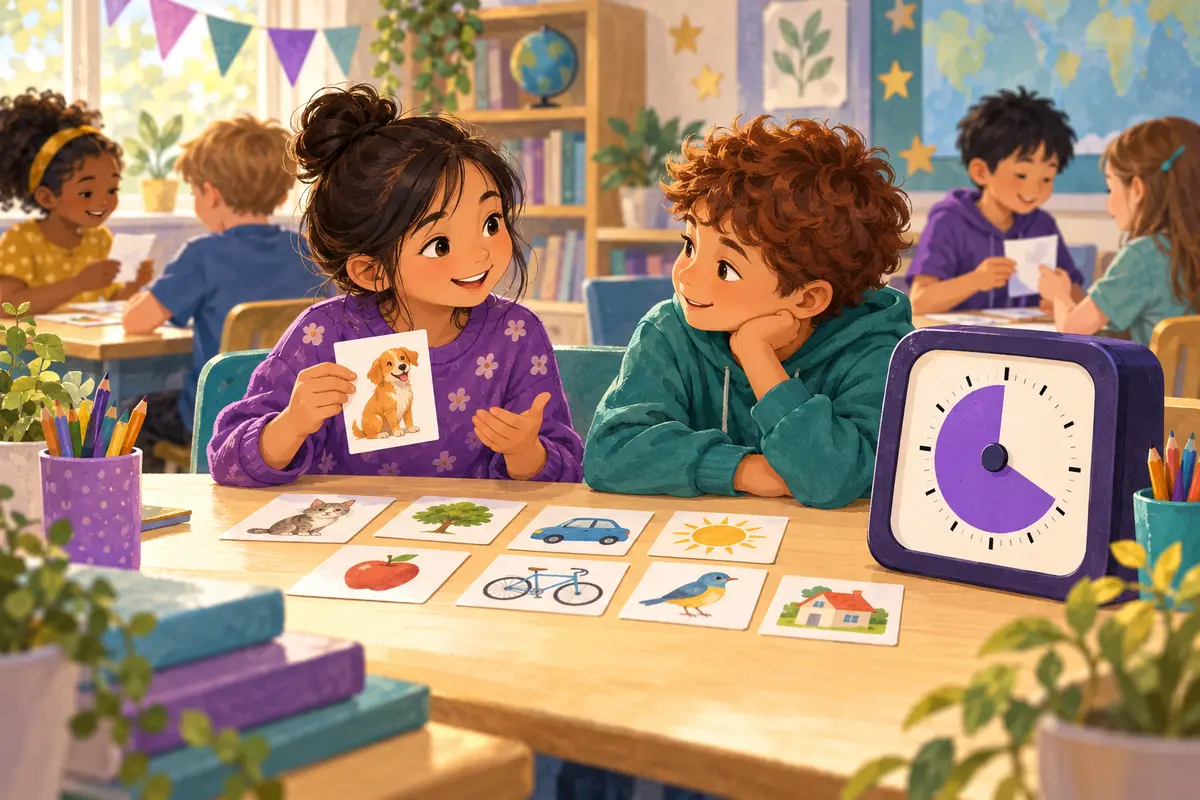
Give partners different weather pictures. Student A describes one without showing it, and Student B identifies the matching card. Model “It’s cold and windy” and “Is it picture three?” Switch roles after two turns. A shared outcome helps keep the exchange focused, while paired work gives more students speaking time than a whole-class guessing round.
Three short activities to rotate
Picture detective works well for description. Reveal part of an image and let pairs discuss a guess before answering. Ask for a clue as well as the word: “I can see rain.” Accept a reasonable alternative if the picture is ambiguous.
For a sorting challenge, give pairs six cards and a purpose, such as choosing clothes for a cold day. Ask them to explain one choice. Some categories allow more than one answer; discuss the reason instead of insisting on a single arrangement.
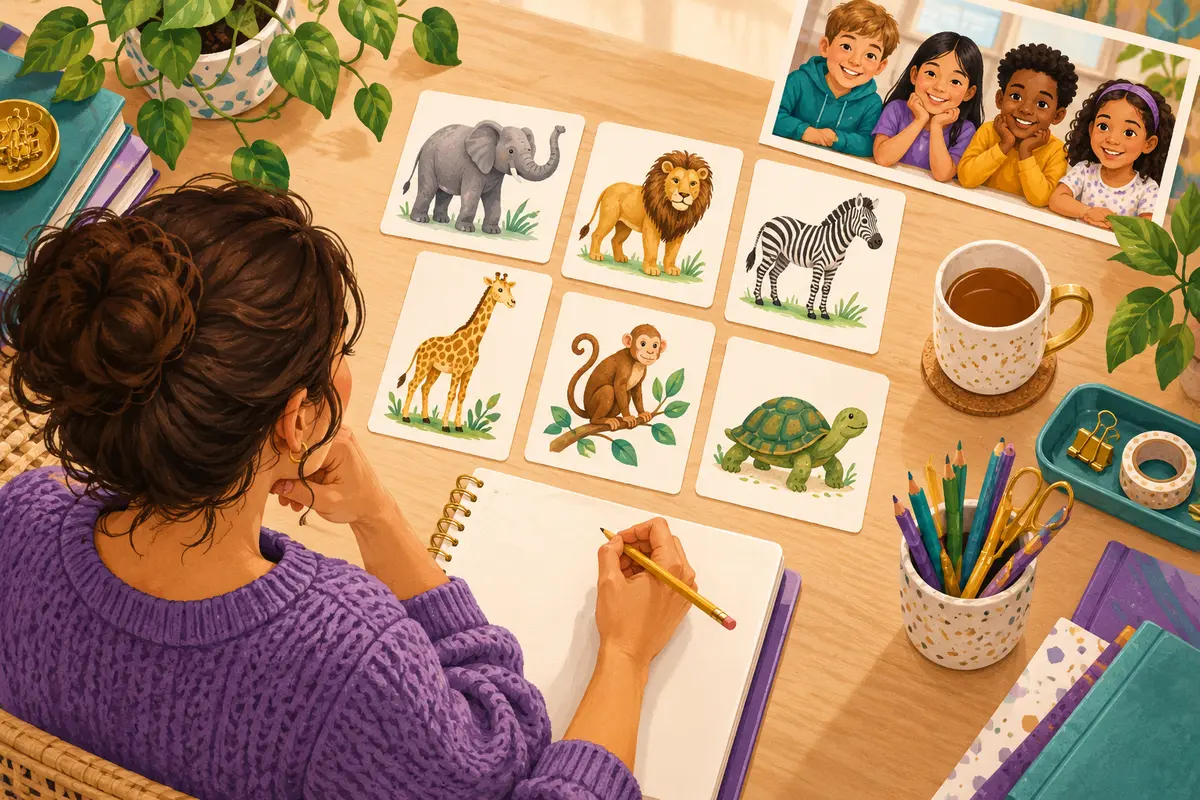
For a memory exchange, let students study four cards, turn them over and tell a partner what they remember. Reveal the cards, check together and repeat with one change. Keep the focus on retrieving language rather than eliminating children who forget.
Build a sentence around the word
Display one short pattern and use it across several examples: “When it’s rainy, I take my umbrella.” Beginners can complete the final word or choose between pictures. More confident learners can add a reason or ask a follow-up question. Remove the written support gradually when learners are ready.
Revisit the words in later lessons
Return to the vocabulary at the next lesson and again during later review. Change the pictures and question order so students must recognize the meaning rather than memorize a sequence. Ask for an answer before revealing it, then give prompt feedback. A quick review should help you decide what to practice again.
Keep activity levels manageable
Alternate speaking, pointing and quiet pair tasks. Offer seated gestures and accessible materials so movement is optional. If an activity creates more waiting than practice, give each pair its own cards or ask everyone to prepare an answer before selecting a speaker.
Check what students can use
Finish with a new picture and a short exchange that uses the lesson’s language. Note whether the difficulty is meaning, pronunciation or sentence construction; each needs a different response. In Classivo, organize the lesson’s picture prompts around the same speaking goal, then use them again for a later review game.